Caring for The Oak Porch

WHAT EVERYONE SHOULD KNOW ABOUT FINISHING OAK

425

Welcome to part 2 of our series on wood types. This week I’ll be discussing Oak. If you haven’t already read part 1, feel free to go check it out here: All about Pine Wood.

A little history of Oak

Oak (or quercus as it is known in Latin) is a hardwood with some 400 known species. It has always been a popular wood in The UK, but in recent times it is even more widely used in construction and also as internal fixtures in clubs and gyms etc. For furniture construction oak has become ever more the wood of choice, a trend expanding year on year since the year 2000 when China, India and Indonesia substantially increased their export markets. Pine has been the wood to suffer from oak’s popularity as it is more widely available in the Far East.

The flowers of many oak trees are known as catkins and they are produced by oaks when they reach their reproductive age which is typically aged 20. They are triggered by rising temperatures in spring. Ultimately it is the catkins of many oaks that turn into the acorns, so maybe that popular phrase… ‘mighty oaks from little acorns grow’ should be ‘mighty oaks from little catkins grow’ although it doesn’t quite have the same ring does it?
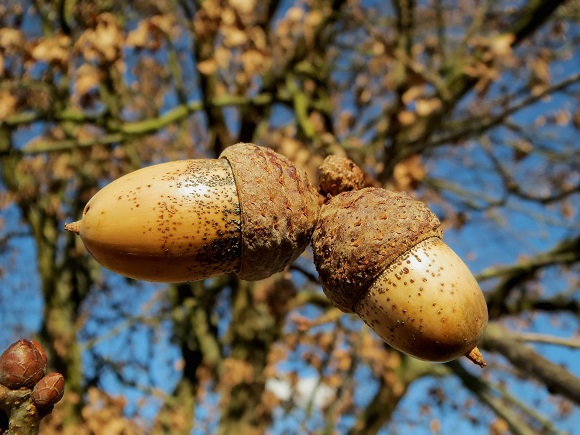
oak-wood-acorn
Acorn of the mighty oak tree

Treating Oak wood

With regards to finishing and treating oak there are numerous possibilities but there are certain requirements that are asked for time and again… Often we are asked how externaloak can be kept looking natural. Whilst the question is easy, the answer is not so straight forward. These are the necessary considerations: –

  • When water penetrates oak it reacts with the high tannin content within oak, resulting in ‘blackening’.
  • The Sun’s UV rays will turn the oak to a silvery hue over time.
  • Clear products are inevitably not completely clear so they tend to ‘bring out’ the natural colours of the oak, normally making it a bit darker and warmer.
  • The levels of rain, wind and sun will make a difference to how quickly the oak changes colour.
oak-turned-grey-silver
Oak turned grey / silver by UV rays & water damage
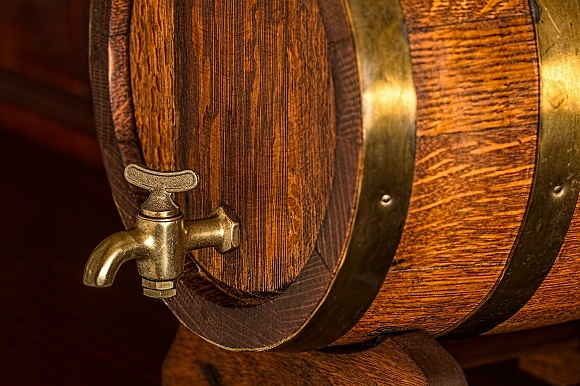
oak-beer-barrel
Oak Barrels traditionally used for Whisky and Beer

If the requirement is to keep the oak looking as natural as possible, whilst preventing blackening or silvering as much as possible, then the following is the best system we know of: –

Osmo 420 extra offers UV resistance and also contains biocide which is important for external timbers as it prevents the wood from becoming diseased with wet rot, dry rot and blue stone etc. The oil also repels water, thus preventing it from going black.

If the requirement is to protect the oak whilst keeping the silvery appearance then the following is the best:

Tung oil is one of the clearest oils on the market and doesn’t offer UV resistance.

If the exterior oak needs to be coloured then the following system is recommended:

If blackening on exterior oak needs removing then a scrub with a fungicidal wash such as Barrettine Mould and Mildew Cleaner is recommended. On the other hand it may be the silvering that needs removing. If so, a scrub with Osmo Wood Reviver Gel (which contains oxalic acid, amongst other active ingredients).
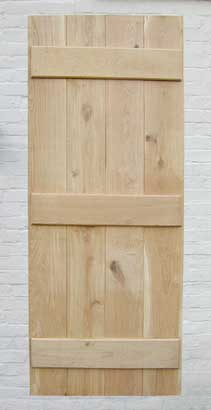
Unfinished Oak
Unfinished Oak
Finished Oak
Finished Oak

One of the most common enquiries we get is how to keep internal oak looking natural. This is not just a case of simply applying ‘clear products’ as they bring out the natural colours of the wood, thus making it little darker and more golden. A very good indication of how your oak will look once it has been finished with a ‘clear’ coat is to dampen an area by applying some water with a clean cloth or sponge. The look achieved when the wood is damp/wet is very close to how it will look once a clear varnish or a clear oil has been applied.

Some customers like the way oak colours when clear coatings are applied to it whilst others want it to be as close as possible to how it looks in its natural state. A more natural look can be achieved by using wood oils that have been specifically formulated to retain the natural appearance of interior Oak. These products include: –

Clear wax polish is the one exception to the above… If a clear wax polish is applied to bare oak (or just about any other wood for that matter) then the colour is kept very natural indeed, it’s just a question of whether a wax polish is going to be durable enough. Internal doors, for example are considered, by most people, to be ideal for finishing with a wax, where as a floor will look nice once waxed but regular maintenance is required, so most people don’t opt for wax for this reason.

If the oak needs to be made darker then Osmo Polyx Oil Tints or Fiddes Hard Wax Oil Tintsare ideal because they colour and protect the wood in the same application. It is always good to try and finish with a clear coat if possible because if the wood gets scratched it is the clear coat that scratches before the coloured coat and therefore the scratch is not as noticeable.

Oiling consideration

If oak is being oiled it is a good idea to sand it with a sandpaper that is no finer than 150 grit. The reason for this is that the pores of the wood are more open thus allowing the oil to sink into the wood better. Better absorption equals greater protection.

Interesting Oak Stats

  • Oak bark is rich in tannin, and is used by tanners for tanning leather.
  • Acorns can be used for making flour or they can be roasted for making acorn coffee.
  • Tannin dissolves and escapes from the wood. Wine barrels are made from oak and it is the tannin that helps to give the wine its’ colour.
  • Sessile oaks of Europe and can reach heights of up to 40 metres.
  • Oak trees regularly live to be 500 years old, although 1,000 years old oaks are also known.
  • A mature oak tree can produce up to 50,000 acorns!

Oakey Dokey then – tune in next time when we’ll be discussing………… Teak!

Tour – Entering from the South Side

The brief to the architect was to completely change the old house and create something very new and contemporary in terms of a living space.  It was such a dark house before – caused by the orientation facing north where you most wanted light (at the back).  He was also asked to tackle the light within the property and get light admitted everywhere possible – so now there are seven roof windows from Velux, and three large Bifolds at the back. In fact, we have also slightly reduced the light on the south side (front) which roasts in summer.  You have to have lived on this site to know the challenges that the sunlight brings.

The house is now clad on the whole upper storey (insulation behind the cladding), and the driveway much enlarged.  The garage is also a metre longer (modern cars are bigger) and the property is wired ready for the issue that electric car charging will bring. It is also ready for fibre optic cable when it arrives this decade.

It’ll obviously look a bit less stark when the garden beds at the front of the property are planted up!!

The plot is still very private and largely concealed from view at the road, and well secluded on other boundaries.


Tour – The East Side

There is a much wider path around the side and a log store is situated here – used for Council garden disposal sacks (paper!) to keep them dry.

The little silver turret is the new balanced flu for the fireplace, making the chimney redundant.

The traditional Kent “look” is often one of part boarded houses, with over-lapping planks. Indeed, the old house had the front gable over the old front door boarded in this way.  In order to go for massive insulation all around the upper story we have boarded the entire property – the boards sit over 100mm of insulation – in fact over 200mm of insulation on the old gable which we discovered was actually a single thickness black wall.  There was daylight showing between the blocks in the roof when we took the old cladding off.

Anyway – as a result, the east wall is now boarded. The colour is just a slightly off white, of course called “silver”!!

Sorting out this east side enabled the architect to install a new small patio at the sunniest part of the plot. It is accessible from a new French window at the front of the lounge (used to be a conventional window there).  The gardener will plant a low hedge to separate it from the driveway area.  It should be a lovely “morning coffee” area!


Tour – The North Side

The north side of the house is dramatically changed.

Most impacted,  there is now a double aspect kitchen and breakfast area – maybe 35 feet long, stretching from front to back.  We figure this is the room which we shall spend most time in and is central to the whole concept. It opens onto the flat access level, rear patios via very huge doors.  The kitchen came from demolishing the old sewing room at the front, then extending out the back.

Next thing that changes the back of the property is that this north wing also doubles the size of the dining room.  We figure this next empty nest phase may include some very much larger groups for dining, so it makes sense. It did though come out a larger than expected. The 10-12 seat dining table still looks lost in there.

This gear change made the architect go for three en-suite double bedrooms plus two smaller bedrooms (now an office and a dressing room). Much more useful to have three double en-suite bedrooms for visitors. The bathrooms are fabulous, by the way. There its enough space in the west wing to give bedroom 2 its own new dressing room.

Tour – The New North Patio

Being the north side of the house, old tiny-patio layout made it impossible to enjoy the outside at the back. The architect took the opportunity to enlarge the patio so that it would have sun and shade. The builders then laid a retaining wall all the way across the back and levelled up the remaining garden – and it all looks splendid.

The level of the patio has been raised a huge amount and there is almost level access as you step from inside to outside. With all the bifold doors folded away in their open position, this should make a a very attractive inside/outside living area in summer. And you don’t have to bend down to weed the flower beds!!  The grey rectangles in the wall are downlighters to illuminate the space at night.

The doorway on the right (double doors) is the back of the sewing room. Triple doors to the left open from the breakfast area and kitchen.

The slabs are actually vitrified porcelain and in an intriguing colourway called “copper”.  It has different characters in the wet and dry days.

Doors to the kitchen and breakfast area

Early spring sun – it should get much better mid season!

Downlighter

Tour – The West Wing

In figuring out what our future needs will be, there was a realisation that there was a need for more space not down sizing.  The house is possibly a third larger and much of this comes from a new west wing incorporating the old garage block.

The right hand door, the one with two panes, is at the north end of the sewing room and marks the start of the West Wing. Before, this was the open space lying between the house and the garage.  The tiny old carbuncle of a utility room stood pretty much where that doorway is.

The tall left hand window is one part of the sewing room, central window is the utility room, and the door opens on to the bike room.

New back door matching the front!  We are still waiting for the two locks to be coordinated!

This side access never existed before – it was crammed full of laurels and inaccessible.

Tour – The Driveway

The new driveway is 2-3 times the size of the old one.  Parking restrictions around neighbourhoods like this mean you have accommodate your own guests cars.

It is laid in three layers – a hardcore laser levelled part goes in first, then tarmac layer goes on next, then finally a multi-coloured gravel layer goes in and is bonded in place with a resin and left to dry.  It took three chaps on their hands and knees two days to trowel in the gravel by hand. Looks lovely though and is probably the most commented on feature of the whole house.  It really strikes you the minute you enter the gates.

They have also managed to have a bonded finish on the manhole covers to make them almost disappear.  The drive also has a car washing drain, a car charging point and beneath it lies a big cable duct to take fibre optic cable when it arrives in the next decade.

The front door – porch yet to be added!

Tour – The Entrance Hall

Brand new to the house is a nice entrance hall on the front of the property.  You enter through a very wide (1.3metres) entrance door – one of these highly insulated German engineered things… it has no conventional hinges but instead a pivot.  The little slit of a window acts as a concealed grip handle on the outside… which illuminates at night!!

Inside you are immediately struck by the warm applewood floor, and it’s very light – illumination by two computer controlled Velux windows in the gable roof overhead.

Pretty pleased that the lines in this door and side windows matches well with the lines in the internal oak doors … and feature in the skirtings!  That little black thing on the door is actually like a little iPhone to let you view who is outside.

View through to the dining room (double doors). The old cloakroom is behind that door on the left.

two of these Velux windows illuminate the space from above

Our shoe bench – now a prized acquisition!

Tour – Stairs from Hall to the Landing

One of the lovely new features is the oak and glass staircase leading from the entrance hall to the upstairs landing. This was custom made by a local joiner in Staplehurst called Glade Joinery. A super job it is too.

The overwhelming thing about all this is the oak feel to everything. The landing at the top of the stairs used to be very dark but now has a glazed door from “the office” letting light in.

You might notice that there are tiny little safety lights along some of the stair treads going up the stairs – this was the electrician’s favourite feature!


This used to be the old airing cupboard.  The new water tank is much larger and that mass of pipes is to control the new upstairs heating – each radiator has its own zone and each room its own thermostat – all computer controlled from the iPhone!  We may yet have to find a clever way to vent this cupboard though.