


Will need to re-centre that Post Box !!
Welcome to part 2 of our series on wood types. This week I’ll be discussing Oak. If you haven’t already read part 1, feel free to go check it out here: All about Pine Wood.
Oak (or quercus as it is known in Latin) is a hardwood with some 400 known species. It has always been a popular wood in The UK, but in recent times it is even more widely used in construction and also as internal fixtures in clubs and gyms etc. For furniture construction oak has become ever more the wood of choice, a trend expanding year on year since the year 2000 when China, India and Indonesia substantially increased their export markets. Pine has been the wood to suffer from oak’s popularity as it is more widely available in the Far East.
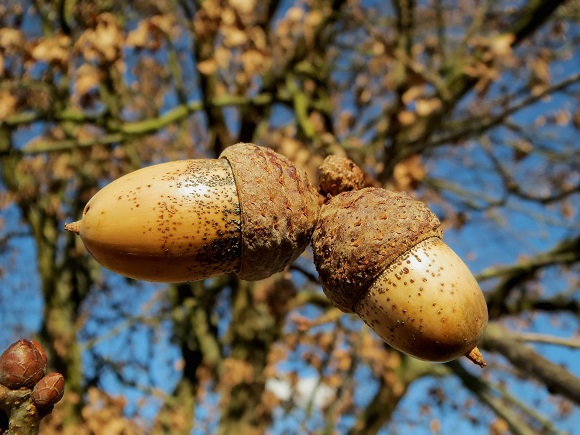
The flowers of many oak trees are known as catkins and they are produced by oaks when they reach their reproductive age which is typically aged 20. They are triggered by rising temperatures in spring. Ultimately it is the catkins of many oaks that turn into the acorns, so maybe that popular phrase… ‘mighty oaks from little acorns grow’ should be ‘mighty oaks from little catkins grow’ although it doesn’t quite have the same ring does it?
With regards to finishing and treating oak there are numerous possibilities but there are certain requirements that are asked for time and again… Often we are asked how externaloak can be kept looking natural. Whilst the question is easy, the answer is not so straight forward. These are the necessary considerations: –
 |
 |
If the requirement is to keep the oak looking as natural as possible, whilst preventing blackening or silvering as much as possible, then the following is the best system we know of: –
Osmo 420 extra offers UV resistance and also contains biocide which is important for external timbers as it prevents the wood from becoming diseased with wet rot, dry rot and blue stone etc. The oil also repels water, thus preventing it from going black.
If the requirement is to protect the oak whilst keeping the silvery appearance then the following is the best:
Tung oil is one of the clearest oils on the market and doesn’t offer UV resistance.
If the exterior oak needs to be coloured then the following system is recommended:
If blackening on exterior oak needs removing then a scrub with a fungicidal wash such as Barrettine Mould and Mildew Cleaner is recommended. On the other hand it may be the silvering that needs removing. If so, a scrub with Osmo Wood Reviver Gel (which contains oxalic acid, amongst other active ingredients).
 |
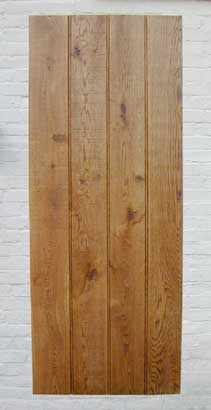 |
One of the most common enquiries we get is how to keep internal oak looking natural. This is not just a case of simply applying ‘clear products’ as they bring out the natural colours of the wood, thus making it little darker and more golden. A very good indication of how your oak will look once it has been finished with a ‘clear’ coat is to dampen an area by applying some water with a clean cloth or sponge. The look achieved when the wood is damp/wet is very close to how it will look once a clear varnish or a clear oil has been applied.
Some customers like the way oak colours when clear coatings are applied to it whilst others want it to be as close as possible to how it looks in its natural state. A more natural look can be achieved by using wood oils that have been specifically formulated to retain the natural appearance of interior Oak. These products include: –
Clear wax polish is the one exception to the above… If a clear wax polish is applied to bare oak (or just about any other wood for that matter) then the colour is kept very natural indeed, it’s just a question of whether a wax polish is going to be durable enough. Internal doors, for example are considered, by most people, to be ideal for finishing with a wax, where as a floor will look nice once waxed but regular maintenance is required, so most people don’t opt for wax for this reason.
If the oak needs to be made darker then Osmo Polyx Oil Tints or Fiddes Hard Wax Oil Tintsare ideal because they colour and protect the wood in the same application. It is always good to try and finish with a clear coat if possible because if the wood gets scratched it is the clear coat that scratches before the coloured coat and therefore the scratch is not as noticeable.
Oiling consideration
If oak is being oiled it is a good idea to sand it with a sandpaper that is no finer than 150 grit. The reason for this is that the pores of the wood are more open thus allowing the oil to sink into the wood better. Better absorption equals greater protection.
Interesting Oak Stats
Oakey Dokey then – tune in next time when we’ll be discussing………… Teak!
Designing front steps and porch with those pesky dimesions!!


We have a drop of three brick courses plus a bit from the front door threshold down to the driveway surface. It’ll mean two steps – and here is a sample nearby dealing with the size size challenge. It could be a model for what we need and blend in with the porch ideas.


 House Project